arukas S1
The Machine’s Instinct
An arukas BLACK Company
Arukas S1 is a specialized division under Arukas Black, dedicated to mechatronics research and development. Known internally as Sector 1, it serves as the central laboratory responsible for pioneering core technologies and experimental systems envisioned by Arukas Black across multiple sectors.
The S1 team was personally handpicked and trained by Alistair Sean D’Rozario, using his proprietary training methodologies refined over more than fifteen years. His process emphasized the cultivation of scientific instinct over conventional skill training, leading to unprecedented speed, creativity, and precision in technological development.
This unique philosophy has become the driving force behind Arukas itself — a mindset passed on to his scientific successors, who now continue to push the boundaries of possibility.
In a world dominated by cookie-cutter engineering and incremental progress, Arukas S1 stands apart — daring to explore novel principles, breakthrough mechanisms, and frontier technologies that redefine how machines and intelligence converge.

The Ledger of Dreams
Inventions begin not with machines,
but with a ledger — a record of dreams born from human curiosity.
These ledgers once held the unnoticed ideas
that shaped our future — the same kind that guided Tesla, Da Vinci, and countless others.
A great idea alone is never enough.
It takes patience, mastery across many arts,
and the courage to build even when the outcome is uncertain.
This is why Sector 1 exists —
to bring the Arukas ledger to life,
turning imagination into matter,
and mistakes into meaning.
Prototypes pile higher than the sky here.
And within that beautiful madness
lies our greatest strength —
the courage to believe it’s possible.
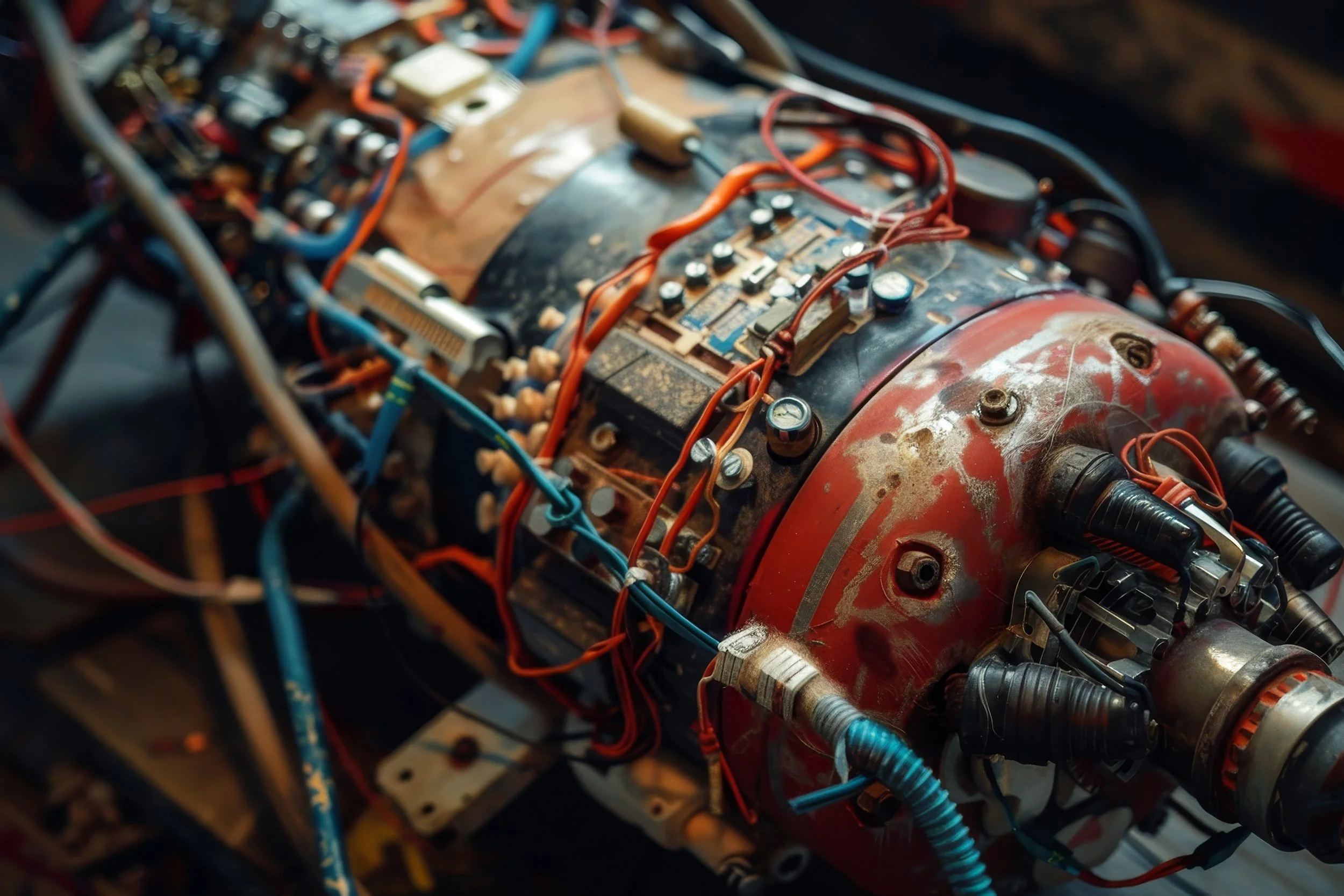
The Art of Chaos
Inventions are simply mistakes waiting to happen —
and that’s what research truly is at its core:
the endless permutations of possibility,
superposed upon one another until they reveal
the hidden, random key to the unknown.
Almost every breakthrough we’ve made began not from a plan,
but from something forgotten on the table,
a component we didn’t remove,
or the mess we didn’t clean up.
Those accidents have led to more discoveries
than all the hours of deliberate thinking combined.
The real key to research is speed —
move fast through your iterations,
make bold, instinctive decisions,
and the path will begin to reveal itself.
Let your instincts guide you —
engineering will follow.

The Craft of Creation
Understanding advanced manufacturing is the Achilles’ heel of true creation —
for every idea, no matter how visionary,
must one day face the discipline of the machine.
Built on decades of manufacturing excellence,
nations like China have redefined scalability and precision,
while Japan, with its relentless attention to detail,
has shaped the very breakthroughs that power modern technology.
To invent is to understand your tools —
to know the materials, the processes,
and the quiet limits of what can be built today.
In a world moving at blinding speed,
curating a deep, evolving mastery of manufacturing techniques
is what allows designers and researchers alike
to build the future in the present.

The Digital Frontier
Everything is digital now —
there’s no escaping the precision and flexibility
that embedded systems offer over their passive, mechanical ancestors.
But hacking together off-the-shelf parts
is a double-edged sword.
Without a deep understanding of hardware,
innovation becomes fragile — elegant only in code, not in creation.
True mastery begins with the hardware itself.
Every passive component, every trace and resistor,
plays a role in shaping performance long before software enters the loop.
Neglecting the physical layer of design
is the most common error in modern engineering.
A well-crafted circuit will always outperform a coded patch,
because hardware isn’t the last resort — it’s the first respect.
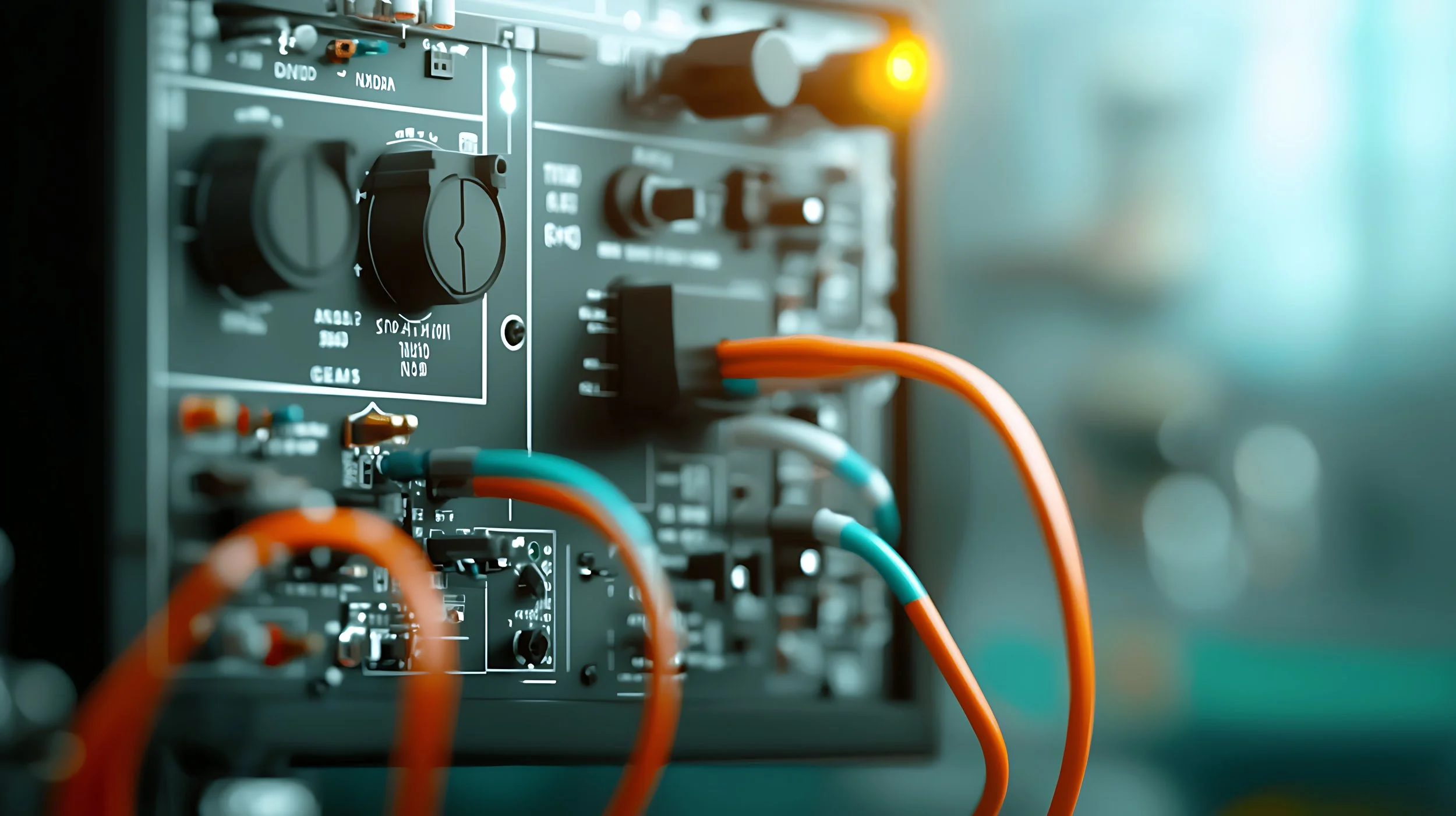
Signal Intelligence
Signal intelligence is one of the most underrated domains —
a bridge between the digital and the passive,
where communication becomes calibration,
and calibration becomes control.
The transmission of signals — even through the wrong sensors,
in the wrong environments — can unleash chaos.
That’s why signal translation and conversion
are not mere afterthoughts,
but the foundation upon which feedback and decision systems rely.
Every architecture depends on how well it listens.
Calibration offsets aren’t always the answer —
sometimes, the real solution lies deeper,
in rethinking how the system interprets what it feels.
Because in the end, precision isn’t found in correction —
it’s found in understanding.

The Beauty of the Lab
There’s a quiet beauty in the lab —
the glow of indicators, the hum of sensors,
the tangle of cables that only a few can see as art.
While products are crafted for everyday users,
they often hide the raw elegance of technology —
the honest, unpolished aesthetic that breathes life into innovation.
“Naked look” products are becoming mainstream
not because of trend,
but because they reveal what was always there —
the depth that no artist’s cover can replicate.
That’s why design interpretation matters.
Every build tells a story.
From the first prototype to the final unboxing,
and even at the end of its life —
how a device is revealed defines how it will be remembered.

The Human Equation
Emotion is the lifeline of creation.
At our core, it is feeling — not logic — that drives every motion,
every decision, every stroke that carves meaning into invention.
Without emotion, progress is hollow.
Perseverance born from will transforms outcomes
in ways no reward or metric ever can.
To do what ignites us — what makes us burn with energy —
is to create from the deepest part of who we are.
This is the secret of Arukas:
a truth too rare to teach,
too human to replicate,
and too powerful to steal —
because it can only be shared.